For builders and developers
Hand over more than keys. Hand over the history of the home.
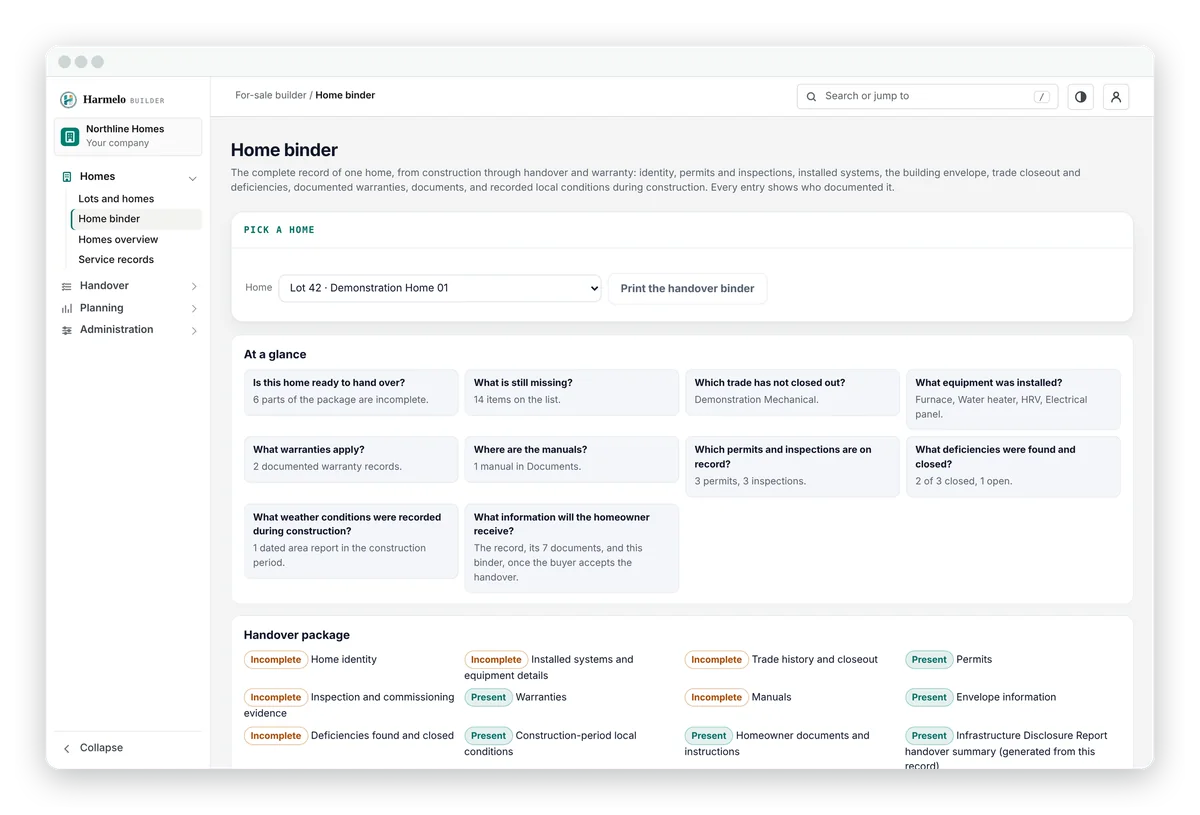
Model, warranty and trade information is lost between site teams, trades, warranty staff and buyers. Give every buyer a digital home binder connected to the systems, trades, warranties and records of the home, so when a homeowner calls you start with the record instead of reconstructing the build.
Access for builders is arranged with Harmelo after review. Nothing on this page creates an account.
- The problem
- Buyers receive a box of paper, and the first callback starts with a search.
- What Harmelo does
- A home binder connected to the actual home: equipment, trades, warranties, permits and documents.
- The outcome
- A handover that reflects the build, and callbacks that start from an answer.
What it costs today
Callbacks start with a search, not an answer.
They do not know which trade installed the system, so every question lands on your warranty desk.
Model numbers, registrations and manuals are scattered across trades and site files.
The same installation issue on twenty homes looks like twenty separate calls.
The lifecycle
From construction to ownership, one record.
The home binder is one moment in a longer story. The record starts while the home is built and keeps working long after the keys are handed over.
- ConstructionTrades file what they install: equipment, model, serial, permits and commissioning records.
- PossessionReadiness shows what is complete and what is missing; the buyer receives the record, not a box of paper.
- WarrantyCoverage dates from the record, under the applicable new home warranty timing, with warranty items kept with the equipment.
- ServiceCallbacks and the first service visits start from what was installed and by whom.
- OwnershipThe homeowner keeps the record growing, and can transfer it to the buyer when the home sells.
- The problem
- Callbacks start with a search for which trade installed what.
- What Harmelo does
- Each trade is connected to what it installed, with model, serial, warranty and permit records on the home.
- The outcome
- Fewer wasted callback hours, and a buyer handover that reflects the quality of the build.
What the record holds
A digital home binder connected to the actual home.
- Installed equipment and system identities, with model, serial and installation date
- Each trade connected to what it installed
- Warranty, permit, commissioning and supporting records
- Readiness: what is complete, what is waiting and which documents are missing
- Alberta 1-2-5-10 warranty timing from the commencement date, not the possession date
- Handover of the complete record to the buyer
- Visibility into recurring issues across lots or trades
From site to the next owner
The people change. The building record continues.
- Builder packageCommencement, permits and the warranty framework
- Trade installation packageInstalled equipment, model, warranty and evidence
- Inspection recordObservations attributed to the inspector, as delivered
- Ownership and service historyService, repairs, documents and open gaps
- Authorized transfer recordHistory continues with the property, with the owner’s authorization
The next owner receives the record, with authorizationAuthorized history continues with the property instead of being reconstructed from the beginning.
In the product
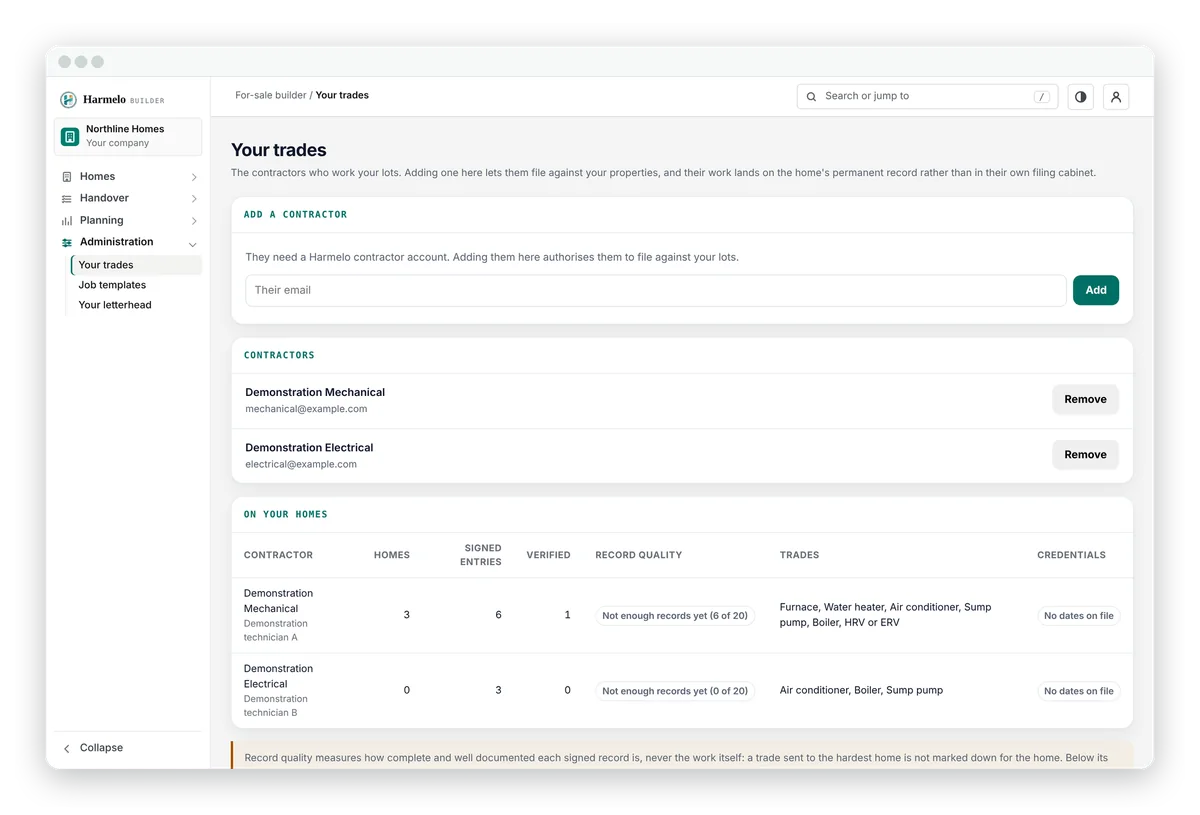
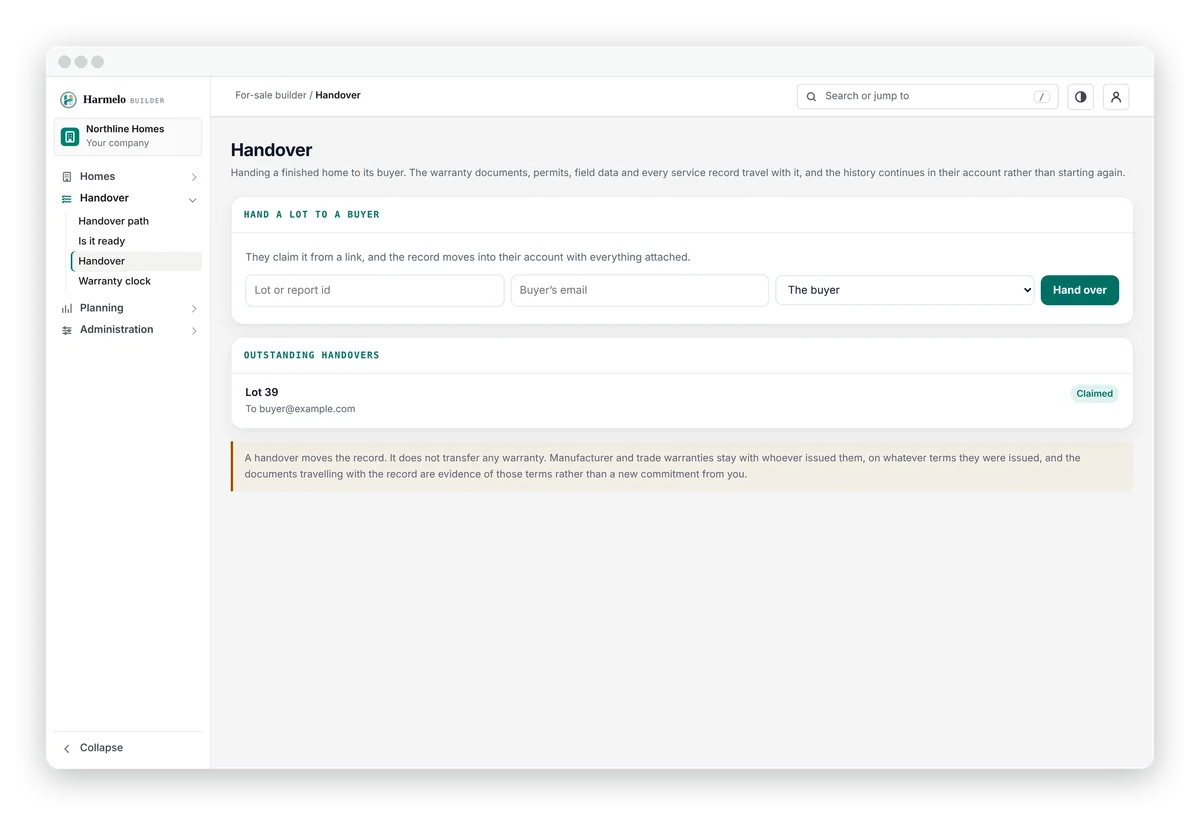
The trades and the handover, in the builder console.
- The problem
- Nobody can say which trade installed what.
- What Harmelo does
- Contractors you authorise file against your lots, and their work lands on the home's record.
- The outcome
- Callbacks reach the right trade the first time.
- The problem
- Possession day loses everything that was not in the binder.
- What Harmelo does
- Hand a lot to its buyer and track the handovers still outstanding.
- The outcome
- The buyer inherits the record, not a search.
Boundaries
What the handover record is, and is not.
The record keeps the trades connected to the home. When service is needed, a request can be sent to an eligible connected contractor, who can accept or decline it. Harmelo does not automatically assign the original installer or dispatch work around the contractor. A handover moves the record; it does not transfer, extend or register any warranty, and manufacturer and trade warranties stay with whoever issued them. Harmelo does not certify workmanship.
Information that is not organized before possession is scattered by the first service call.
Pricing
Builders hand over without a builder subscription.
Builders can create and hand over the record without an annual builder subscription. Homes the builder retains or operates are covered under Harmelo’s portfolio pricing. Custom implementation, data migration or integration work, if requested, is scoped separately.
Next step
Request a virtual walkthrough
Tell us what you build. Someone from Harmelo will reply to arrange a virtual walkthrough using demonstration data.
- Access is arranged after review, one organization at a time.
- No account is created and nothing is charged.
- Homeowners keeping the record of their own home use Asset History Report, the homeowner product. Harmelo is for the professionals and organizations around the building.