Intelligence
Turn fragmented building history into operating intelligence.
What needs attention, what may need funding, where evidence is thin and what the records show over time, drawn from the record itself and stated with its basis.
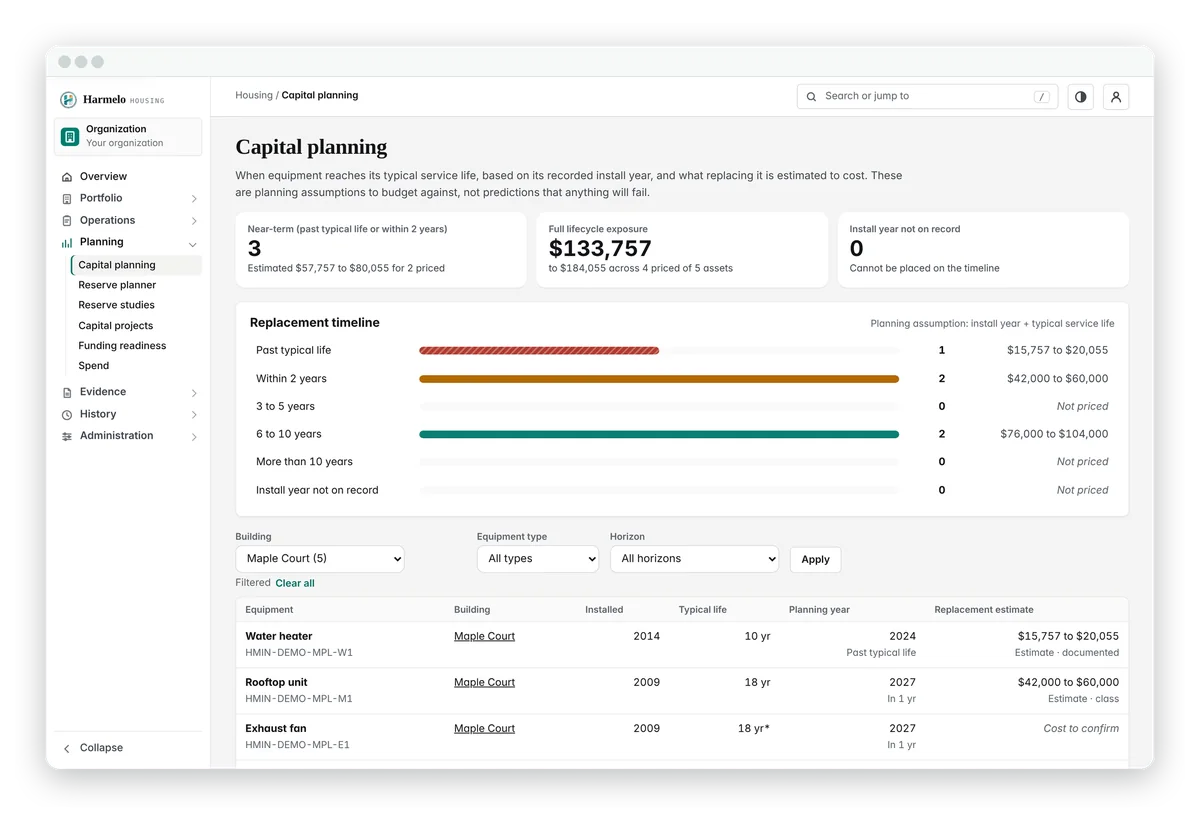
What needs attention
Every item with its reason and its evidence.
Safety observations recorded at a visit, recommendations still open, credentials that expired or are expiring, equipment past its typical service life and records that are incomplete. Each opens what it came from.
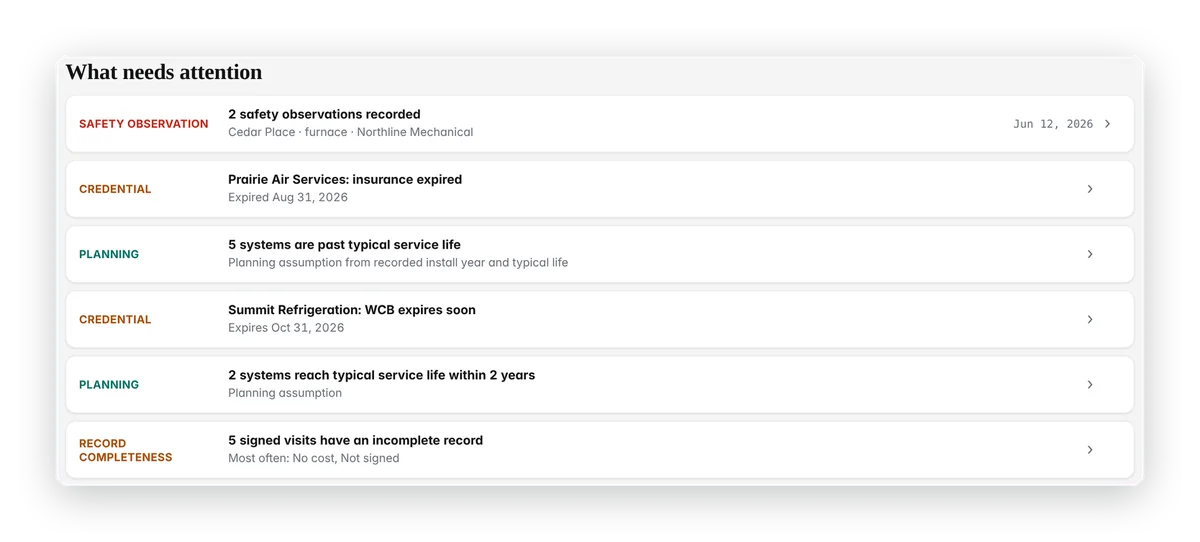
Capital and reserve planning
Plan replacement from the equipment actually on record.
Replacement windows come from documented install years and typical service life; cost ranges from what is documented or a stated class range. The reserve planner compares lower, base and higher requirement scenarios.
Planning assumptions, not predictions that anything will fail. Estimates should be reviewed alongside current inspections, professional advice and the organization's own planning requirements.
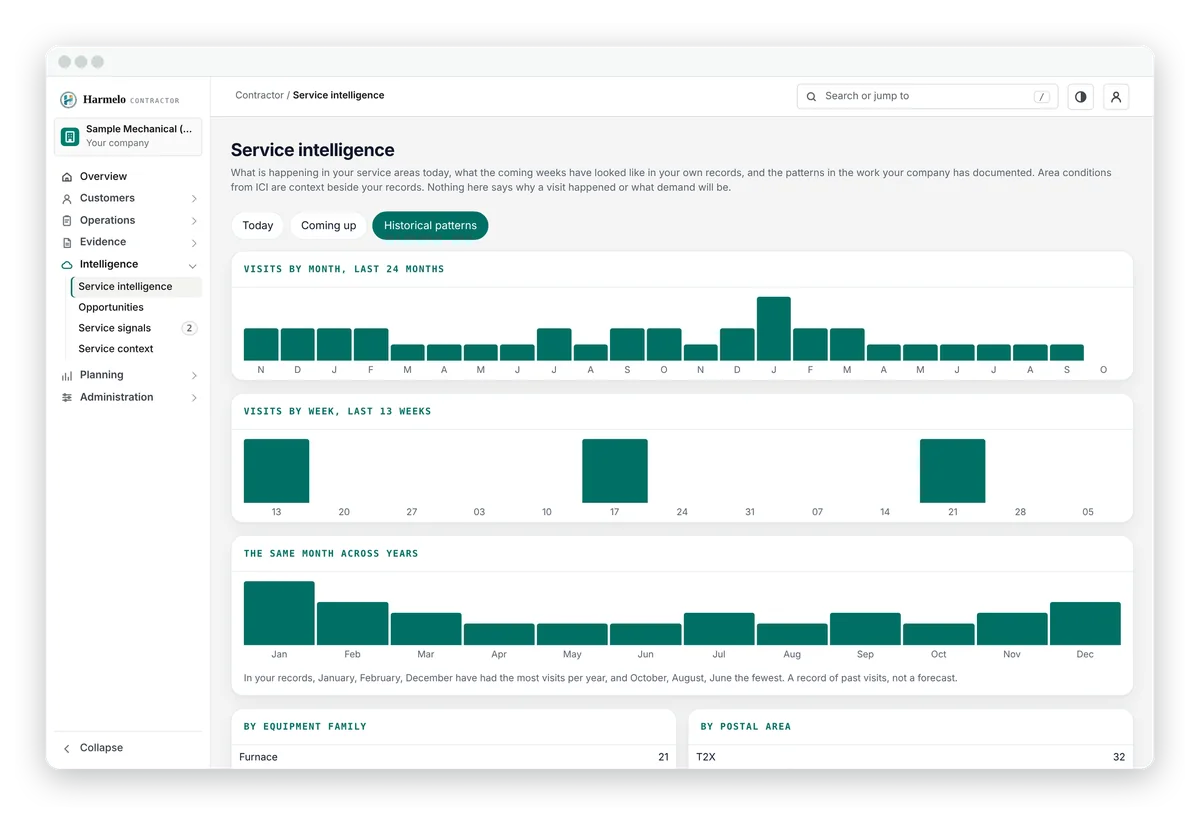
Service patterns
What the records show over time.
Visits by month and week, the busier and quieter months in your own history, volume by equipment family and by area, repeat service and contractor changes. Observed history only: no cause, no forecast and no score.
Environmental context
Weather and environmental context beside the work, never as proof.
Recorded area events, such as extreme cold, sit beside the service history so a team can see what happened around the visits. Context is context: it is never converted into proof of damage or a prediction of failure.
Recorded area events
Public environmental records for the areas a portfolio or a service company covers, shown beside the visits around them.
Checklists your organization runs
Preparedness actions recorded and reviewed in the workspace, with who did them and when.
Context, not cause
No claim that weather caused a fault, and no forecast of service demand. Harmelo does not show an official alert it has not received from the issuing authority.
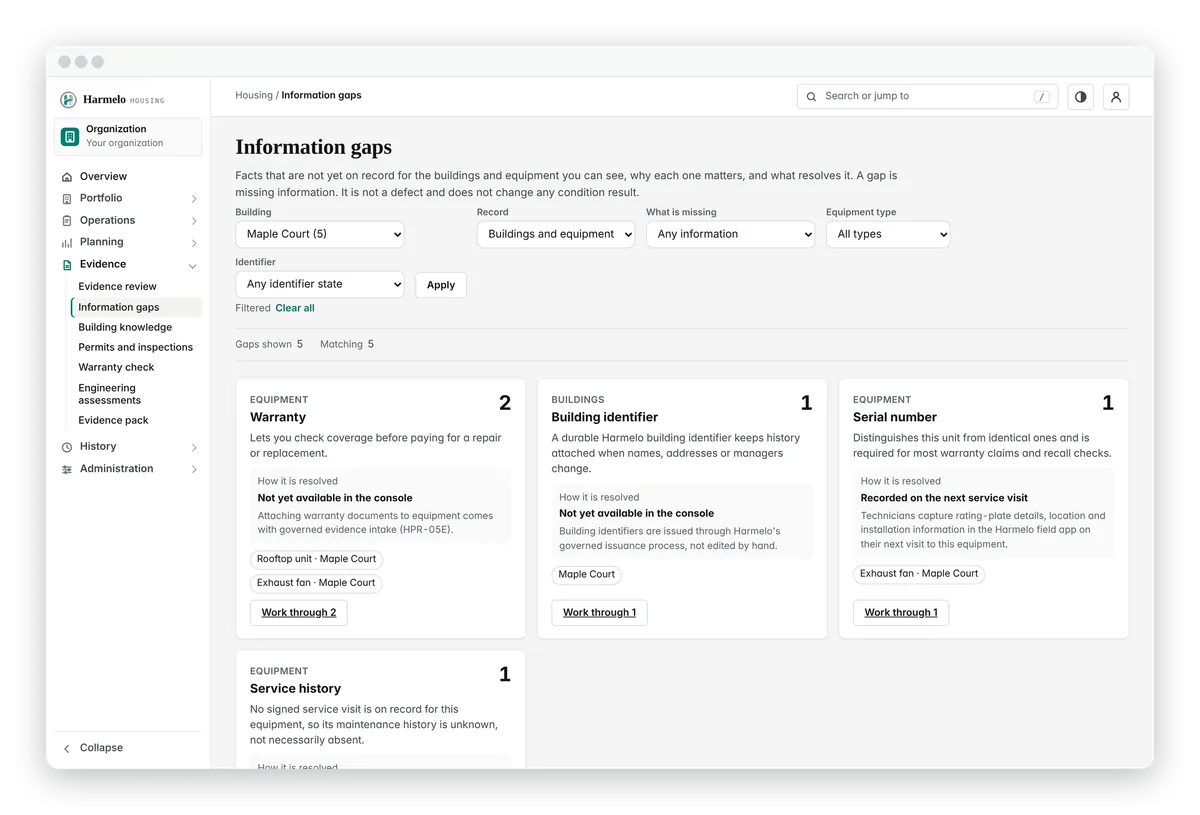
Information gaps
Know where the evidence is thin before it matters.
Gaps are counted per building and per kind, from missing serial numbers and warranties to buildings without an identifier, each with how it is resolved. A gap is not a finding about the building.
Next step
Start from what the record shows.
A virtual walkthrough of attention, planning, patterns and gaps on a demonstration portfolio.